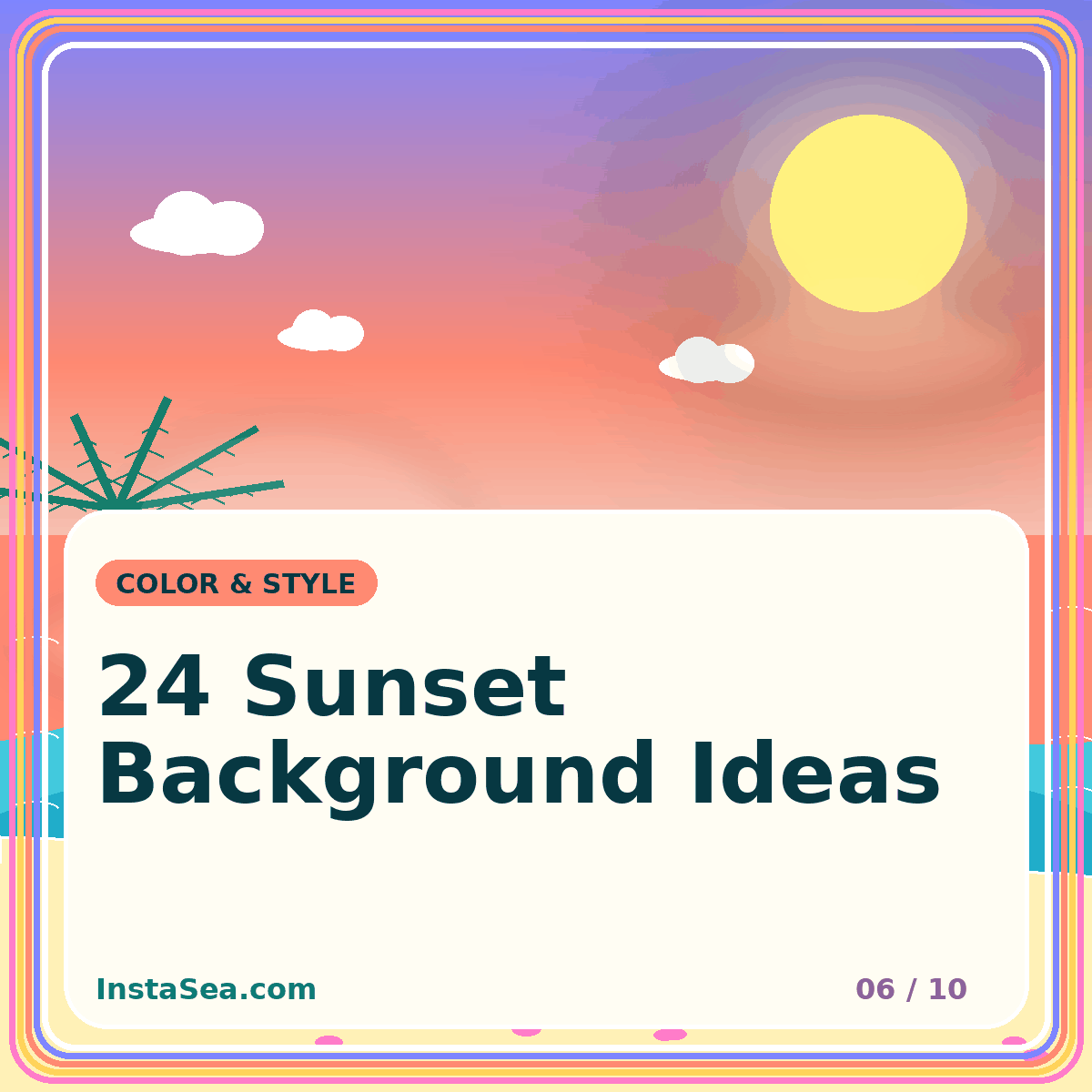
A sunset beach background is not one orange gradient. The most convincing scenes contain a sequence: warm light near the sun, cooler color away from it, cloud shadows, changing water reflections, and foreground shapes that respond to the remaining light. Even a graphic illustration benefits from that structure. The challenge is choosing which part of sunset supports the subject instead of allowing the sky to become the only focal point.
These 24 ideas are organized by color story and use. They can guide photography, AI image prompts, illustration, or a brand moodboard. Before planning a real outdoor session, the NOAA Solar Calculator can help estimate solar position for a location and date. Local terrain, weather, and buildings still affect the view, so arrive early and treat the calculation as one part of scouting.
Soft peach and cream sunset ideas
- Peach horizon band: Keep the sun outside the frame and use a narrow peach glow beneath a pale cream sky. Place the horizon low so the background feels spacious behind a profile portrait.
- Shell-pink clouds: Use small rounded clouds with pink undersides and cool white tops. A calm aqua sea prevents the whole frame from becoming warm and keeps skin from blending into the sky.
- Warm sand reflection: Photograph or render wet sand as a soft mirror of the peach sky. Leave the reflection slightly darker than the sky so the horizon remains visible.
- White cabana afterglow: Let warm sky color bounce onto white linen and pale wood. Keep the subject in open shade for gentle facial contrast while the background carries the sunset.
Peach palettes work well for approachable profile photos and light brand systems. They can become too sweet when every object is pink. Keep one neutral anchor—cream fabric, natural brown wood, blue-gray shadows, or pale aqua water.
Coral and gold sunset ideas
- Coral sun path: Place the sun just above the water and draw a narrow gold-coral reflection toward the lower edge. Keep the rest of the water teal for contrast.
- Cloud-edge fire: Use a darker cloud bank with a bright coral rim where sunlight escapes. Preserve detail inside the cloud so it does not become a flat black shape.
- Palm rim light: Position a palm at the outer edge and let gold light trace a few leaves. Avoid a dense silhouette directly behind the person’s hair.
- Coral cliff face: Let low sun skim a pale rock wall, producing warm texture on one side and lavender shade on the other. Reserve a calmer sea area for the subject.
Coral and gold create energy but can turn skin orange. Separate the portrait from the environment with a subject mask or a source of cooler fill.
Lavender and violet afterglow ideas
- Lavender cloud ceiling: Use a broad violet cloud layer above a thin orange horizon. The warm-cool split adds depth without requiring a visible sun.
- Blue-hour shoreline: Photograph after the sun has set, when wet sand reflects violet sky and the water becomes deep blue. Add a small warm light in the distance for scale.
- Electric violet poster: Simplify the sea into navy, violet, and coral bands with a pale circular sun. Add subtle grain so the graphic does not feel digitally flat.
- Lavender mist cove: Use low haze between layered headlands. Each distant layer becomes lighter and cooler, creating depth behind a centered avatar.
Violet scenes need preserved shadow detail. Crushing the foreground to pure black can make hair and clothing merge with the coast. Lift the darkest values slightly or add a soft edge light around the subject. For a night-adjacent look, maintain color in the sea rather than shifting everything to gray.
Aqua-to-gold transition ideas
- Clear lagoon sunset: Keep shallow water bright aqua while the distant sky turns gold. This contrast works best when the sun is behind or beside the camera rather than reflected directly into the lens.
- Turquoise wave edge: Freeze a small wave with warm light on the foam and cool color inside the water. Keep the wave below shoulder height in a portrait composition.
- Mint sky fade: Transition from pale mint overhead to butter yellow near the horizon. Use coral only as a small accent in clouds or clothing.
- Golden sandbar: Place a curved sandbar across teal water and let its upper surface catch warm light. The curve can guide the eye toward an off-center subject.
This palette is recognizably tropical because it preserves water color instead of warming the entire frame. It suits creator portraits, swim and resort branding, and cheerful illustrations. Use the InstaSea filter recipe to keep aqua depth while warming highlights. If the water becomes the brightest element, reduce saturation behind the face.
Silhouette and shape-based ideas
- Single palm arc: Use one curved trunk and a small crown of leaves at the edge. Its shape frames the sky without filling it.
- Walking shoreline silhouette: Place a small distant figure near the lower third, separate from the profile subject. The figure provides scale but should not compete for identity.
- Surfboard geometry: Lean one simple board shape against a cabana wall, catching a thin rim of sunset color. Keep branding and text off the board.
- Dune grass layers: Backlight fine grass along the lower edge. Use overlapping densities so the foreground feels organic rather than like a repeated brush stamp.
Silhouettes are powerful because the eye reads shape quickly, but they can merge with dark hair and shoulders. Keep them away from the subject’s outline or use a lighter patch of sky between forms. In a circular profile crop, outer-edge silhouettes are safer than central ones. Preview the mask before committing to the final layout.
Weather and cloud-drama ideas
- After-rain opening: Place a bright gold opening beneath retreating blue-gray clouds. Wet sand and leaves reflect both warm and cool zones.
- Virga in the distance: Show a soft rain shaft far offshore with the foreground still warm. Keep the weather subtle and realistic rather than turning it into a storm spectacle.
- High feather clouds: Use thin diagonal clouds that catch pink light and lead toward the subject. Avoid lines that appear to pierce the head.
- Cloudless color field: Let a clean gradient and a low horizon carry the image. Add texture through water and sand rather than inventing decorative clouds.
Clouds should respond to the sun’s position. The side facing the light may carry coral or gold while the underside remains cooler. Randomly coloring every edge reduces volume. In a generated image, specify the location of the sun relative to the cloud bank.
Compose sunset backgrounds around a portrait
Choose the face position before placing the sun. A bright sun directly behind the head can create a halo, flare, or blown hair edge. Moving it to the opposite third often balances an off-center portrait. Keep the horizon clearly above or below the shoulders.
Use negative space deliberately. An open sky behind textured hair improves separation, while a cloud edge can frame the head if it stays a comfortable distance away. Reserve the corners for decorative palms, grass, or architecture because circular avatars may cut them away. The square crop guide provides a practical safety zone.
A modular sunset prompt pattern
Change one variable per round. First compare sun position, then cloud density, then color balance. Do not rewrite the entire prompt after every result. A stable base makes it easier to identify which phrase caused a useful difference. Save successful combinations with clear names such as “peach low-horizon open-center” or “violet cloud bank left light.”
Keep sunset color believable
Watch neutral objects. White foam may become warm, but it should still contain white highlights. Dark palms may pick up rim color, but their shaded interiors should not glow orange. Skin should show warm light on the sun-facing side and more neutral or cool tone in shadow.
Use saturation last. First establish exposure, highlight detail, and warm-cool separation. Then raise color gently while checking small previews. Sunset images can look rich on a large screen and become an orange-purple block at avatar size. The best grade keeps the face readable and leaves at least one calm area for the eye to rest.
Sunset background checklist
- The sun, shadows, reflections, and rim light agree on direction.
- Warm color near the horizon is balanced by cooler sky, water, or shade.
- The horizon does not intersect the face or neck.
- Clouds retain shape and do not clip into flat white or black areas.
- Silhouettes frame rather than merge with the subject.
- Skin remains recognizable and is not covered by the global sunset grade.
- The background works in both square and circular crops.
A sunset background becomes memorable through structure, not maximum drama. Pick a color story, place the light with intention, preserve cool counterpoints, and reserve clean space for the subject. Whether you photograph, illustrate, or generate the scene, those decisions create an atmosphere that feels like a real moment rather than a generic orange filter.